
Optometry Practice Sale Mistakes in 2026: 10 Costly Errors to Avoid

Selling an optometry practice is not only a valuation exercise. It is a sequence of decisions about timing, confidentiality, buyer selection, legal structure, deal terms, and what happens after closing. A strong practice can still produce a disappointing outcome if the owner makes the wrong decision at one of those points.
That risk is especially relevant in 2026. Eye-care consolidation continues to bring private equity-backed platforms, regional groups, strategic buyers, and individual optometrists into the market. At the same time, sellers face more scrutiny around healthcare ownership structures, payer credentialing, clinical control, employment terms, and post-closing obligations.
The most expensive optometry practice sale mistakes are rarely dramatic. They often look reasonable in the moment: responding to an unsolicited offer, signing a short letter of intent, sharing financials before a buyer is qualified, or focusing on the largest headline number. The consequences appear later, when leverage has narrowed or the practical terms of the deal become clear.
If you are still orienting yourself to the full transaction, begin with how to sell your optometry practice in 2026. This article focuses on the errors that can reduce value, weaken negotiating leverage, create unnecessary exposure, or leave you committed to the wrong buyer.

What Are the Biggest Optometry Practice Sale Mistakes?
The biggest mistakes are waiting too long to prepare, using the wrong valuation anchor, losing confidentiality, accepting the first credible buyer, signing an incomplete LOI, comparing headline prices instead of real economics, overlooking healthcare regulations, leaving the seller's post-sale role vague, allowing performance to decline, and involving experienced advisors too late.
Each mistake has the same underlying problem: the seller gives up information, leverage, flexibility, or certainty before fully understanding the tradeoff.
The 10 Biggest Optometry Practice Sale Mistakes in 2026
1. Waiting Until You Are Ready to Exit Before Preparing
Owners often start preparing only after burnout, health concerns, an unsolicited approach, or a firm retirement date turns a future possibility into an immediate need. At that point, there may not be enough time to improve the issues a buyer will notice.
Preparation is not about dressing up the practice for a sale. It is about making the business easier to understand and transfer. Buyers want to see reliable financial reporting, stable providers and staff, organized contracts, defensible billing and coding, a clear payer mix, maintained equipment, a workable lease, and operations that do not depend entirely on the owner.
A rushed seller may have to explain unexplained expenses, missing documents, personal costs in the business, outdated employment arrangements, deferred equipment needs, or a sharp drop in production as the owner reduces hours. Every unresolved issue gives the buyer another reason to slow down, reduce value, add a holdback, or walk away.
Better approach: Begin organizing the practice 12 to 24 months before a preferred sale when possible. If your timeline is shorter, start now. Clean information and stable performance can still improve the process even when there is no time for a long value-building plan.
2. Setting Expectations From Revenue, Rumors, or a Headline Multiple
A neighbor's sale, an industry rule of thumb, or a multiple quoted online is not a valuation. Two practices with similar revenue can have very different profitability, provider dependency, optical mix, growth, lease risk, payer concentration, and buyer demand.
Buyers usually evaluate normalized earnings and the durability of those earnings. They ask which expenses are truly nonrecurring, whether the owner's compensation has been normalized, how much production must be replaced after the sale, whether associate doctors will stay, and how reliably patients and optical revenue will transfer.
An unrealistic price expectation can cause an owner to reject good buyers or waste months pursuing a number the market will not support. An expectation that is too low can leave meaningful value unrecognized.
Better approach: Establish a supportable valuation range before negotiating. Review what an optometry practice is worth and separate the practice's current financial value from its unproven future potential.
3. Mishandling Confidentiality
A practice sale requires disclosure, but not all disclosure should happen at once. Sharing the practice name, detailed financials, staff information, payer contracts, patient data, or strategic plans before a buyer is qualified can create unnecessary risk.
Premature rumors can unsettle employees, cause associate doctors to explore other options, concern patients, or weaken relationships with vendors and referral sources. On the other hand, waiting too long to tell essential team members can create transition problems near closing.
Better approach: Use staged disclosure. Start with anonymized high-level information, confirm the buyer's identity and ability to transact, put an appropriate NDA in place, and release sensitive material only when it is necessary. Have a deliberate plan for when and how staff will be informed. See how to sell an optometry practice confidentially for a fuller framework.
4. Treating the First Serious Buyer as the Entire Market
An unsolicited offer can feel validating and efficient. It may even come from a credible buyer. But one buyer's view does not establish market value, and a familiar brand does not automatically make that buyer the best fit.
Different buyers value different attributes. An individual optometrist may care deeply about local reputation and a manageable transition. A regional group may value geographic density. A private equity-backed platform may focus on earnings, provider depth, and add-on potential. Their expectations for employment, clinical autonomy, branding, staff, and future growth can also differ substantially.
Better approach: Compare a focused group of qualified buyers before granting exclusivity. You do not need a noisy public auction, but you should understand the credible alternatives. Read how to find buyers for an optometry practice and how private equity optometry buyers evaluate practices.
5. Signing a Letter of Intent Before the Important Terms Are Clear
A letter of intent can look preliminary, but it is one of the most consequential documents in the sale. Although many provisions are nonbinding, the exclusivity and confidentiality provisions are often binding. Once exclusivity begins, the seller may be unable to speak with other buyers while the selected buyer completes diligence and prepares definitive documents.
If the LOI states only a purchase price and leaves the rest for later, the buyer gains leverage. Important issues may surface after alternatives have been put on hold: working capital targets, optical inventory treatment, accounts receivable, seller financing, rollover equity rights, earn-out mechanics, real estate, employment, non-compete restrictions, indemnification, or the ability to reduce the price after diligence.
Better approach: Make the LOI specific enough to expose the major economic and lifestyle tradeoffs. Clarify the proposed structure, cash at close, contingent consideration, seller role, key closing conditions, exclusivity period, and major assumptions before signing. A healthcare M&A attorney should review it before your leverage narrows.

6. Comparing Headline Prices Instead of Real Economics
A $3 million offer is not necessarily worth more than a $2.8 million offer. The answer depends on what is paid at closing, what is deferred, what is contingent, what the seller must reinvest, and what adjustments occur before the money reaches the seller.
Review cash at close, seller notes, earn-outs, rollover equity, escrow or holdback amounts, working capital, debt payoff, transaction expenses, asset allocation, taxes, and the value of any required post-sale employment. Contingent dollars should not be treated like guaranteed dollars, and illiquid equity should not be treated like cash.
The same applies to lifestyle. A slightly higher offer may require five more years of work, a broader non-compete, less control over scheduling, or an earn-out based on results the buyer controls.
Better approach: Compare offers across price, certainty, risk, taxes, time, and personal fit. The guide to optometry practice sale terms in 2026 explains how cash, earn-outs, rollover equity, and employment agreements change an offer's practical value.
7. Leaving Legal, Regulatory, and Payer Issues for Diligence
An optometry practice is not an ordinary retail business. Ownership and control rules vary by state, and a buyer's structure may need to account for professional-entity requirements and restrictions on non-licensed ownership or clinical control. Private equity-backed transactions may use a management services organization structure, but the details must fit applicable law.
Credentialing and payer contracts can also affect timing. A change of ownership may require notice, consent, re-enrollment, or new credentialing with government programs, commercial health plans, or vision plans. Lease assignments, equipment financing, optical vendor agreements, business associate agreements, patient-record custody, privacy obligations, and professional licenses can create additional closing conditions.
If these issues are discovered only after the LOI, they can delay closing, change the structure, produce a holdback, or give the buyer grounds to renegotiate.
Better approach: Ask healthcare counsel to identify state-specific ownership, change-of-control, licensing, privacy, and credentialing issues early. Build the required notices and approvals into the closing plan. Do not assume contracts or provider enrollments transfer automatically.
8. Leaving Your Post-Sale Role Vague
Many owners focus on the purchase agreement and treat the employment agreement as a secondary document. In practice, the employment terms may define the next several years of the seller's life.
Clarify required clinical hours, schedule control, compensation, bonus metrics, administrative duties, vacation, malpractice coverage, benefits, location, staffing authority, clinical decision-making, equipment standards, termination rights, and non-compete or non-solicit restrictions. If an earn-out depends on the seller remaining employed or the practice reaching a target, the employment agreement and earn-out must work together.
Clinical autonomy deserves explicit attention. A buyer may promise that nothing will change, but the definitive documents should explain which decisions remain with licensed clinicians and which decisions belong to the management organization.
Better approach: Decide what you actually want after closing before evaluating buyers. Retirement, a short transition, continued full-time practice, and a reduced clinical schedule require different deal structures. Negotiate the post-sale role at the same time as the price.
9. Letting the Practice Decline During the Sale Process
A transaction is distracting. Owners spend time answering questions, collecting documents, meeting advisors, and imagining life after closing. That is exactly when the practice must continue performing.
If revenue, exam volume, optical sales, or profitability falls during diligence, the buyer may question the original valuation. Unexpected provider departures, staff turnover, reduced owner hours, weak collections, deferred equipment maintenance, or a loss of marketing momentum can also undermine confidence.
Most LOIs assume the business will operate in the ordinary course until closing. A material decline can lead to a price reduction, a larger contingent component, delayed closing, or termination.
Better approach: Keep running the practice as though the sale might not close. Protect the patient schedule, monitor collections, retain key team members, maintain equipment, and review current performance frequently. Limit knowledge of the transaction to the people who genuinely need to know.
10. Building the Advisor Team Too Late—or Using Generalists for Specialized Work
A capable local attorney or accountant may know your business well, but healthcare transactions introduce specialized issues. The team should understand optometry economics, healthcare M&A documents, state ownership rules, tax allocation, payer matters, employment terms, and the behavior of different buyer types.
Bringing advisors in after the LOI is signed forces them to work inside a framework that may already favor the buyer. Tax planning may be constrained, key terms may have been conceded, and the exclusivity period may create pressure to accept language that should have been addressed earlier.
Better approach: Assemble the core team before signing an LOI. Depending on the transaction, that may include a healthcare M&A attorney, a tax advisor or CPA, a financial or wealth advisor, and a practice transition professional who can help identify and compare qualified buyers. Right Fit Capital's seller resources explain how a confidential buyer-introduction process can begin without publicly listing the practice.
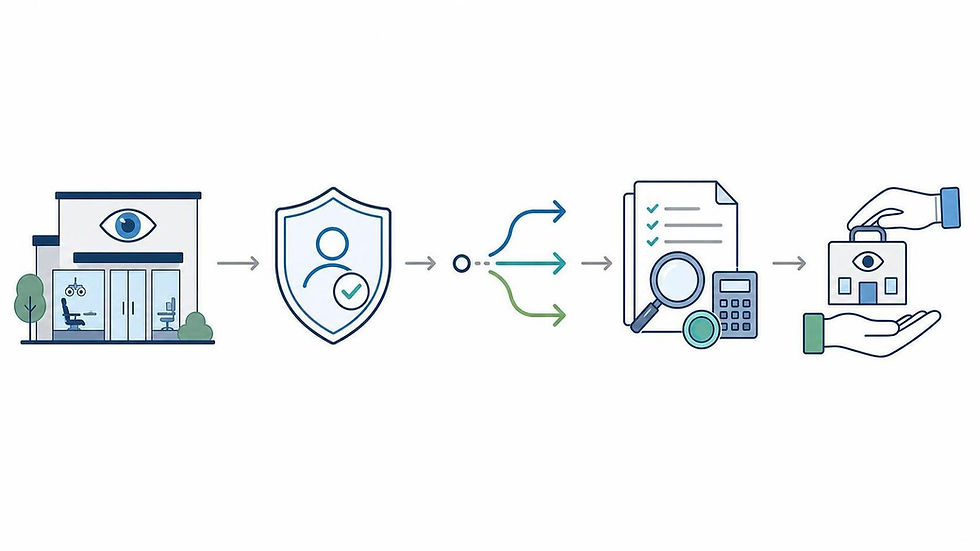
A Pre-Sale Checklist for Optometry Practice Owners
Before you enter serious buyer discussions, confirm that you can answer the following questions:
What are your preferred timing, price, post-sale role, and nonfinancial priorities?
Are three years of financial statements and tax returns organized and reconcilable?
Have owner compensation, personal expenses, and nonrecurring costs been normalized?
How dependent are revenue and patient relationships on the selling doctor?
Which associate providers and key employees are essential to continuity?
Are leases, equipment obligations, payer contracts, employment agreements, and vendor arrangements organized?
What information can be disclosed anonymously, under NDA, and only in confirmatory diligence?
Which buyer types fit your goals for staff, culture, clinical autonomy, branding, and transition?
Who will review the LOI, tax structure, definitive agreements, and post-sale employment terms?
How will the practice maintain performance while the transaction is underway?
You do not need every answer before having an exploratory conversation. You do need enough clarity to recognize when a buyer's proposed process or structure is pulling you away from your priorities.
Frequently Asked Questions About Optometry Practice Sale Mistakes
What is the single biggest mistake when selling an optometry practice?
Signing an LOI before comparing credible buyers and clarifying the important terms is often the most consequential mistake. Exclusivity can reduce the seller's leverage just as detailed negotiations begin.
How early should I prepare to sell my optometry practice?
Twelve to 24 months is helpful when the owner wants time to improve reporting, reduce dependency, stabilize providers, and address legal or lease issues. A shorter timeline can still work, but preparation should begin immediately.
Should I accept the first offer for my optometry practice?
Only after you understand how it compares with realistic alternatives. The first buyer may ultimately be the right buyer, but the offer should be evaluated against other qualified buyer types, full deal economics, transition requirements, and cultural fit.
Is the highest offer always the best offer?
No. Cash at close, earn-outs, seller financing, rollover equity, taxes, working capital adjustments, employment obligations, non-compete terms, and closing certainty can make a lower headline offer more valuable in practice.
Can an optometry practice sale remain confidential?
Yes. A controlled process can use anonymized initial information, buyer qualification, NDAs, staged disclosure, and a planned staff communication timeline. Absolute secrecy cannot be guaranteed, but unnecessary exposure can be reduced substantially.
What is CPOM in an optometry practice sale?
CPOM refers to state corporate-practice restrictions that may limit who can own or control a professional healthcare entity. The rules vary by state and can affect how a transaction with a non-licensed or private equity-backed buyer is structured. Healthcare counsel should assess the specific state and deal.
Can I sell my optometry practice and continue working?
Yes. Many sellers continue clinically for a transition period or longer. The key is to negotiate schedule, compensation, duties, clinical authority, termination rights, and any earn-out interaction before closing.
The Bottom Line
A successful sale depends on more than finding a buyer willing to quote an attractive number. Avoiding common optometry practice sale mistakes helps preserve value, protect confidentiality, maintain leverage, and produce a transition that fits the owner's life after closing.
The best time to identify risks is before exclusivity, not after. Define your priorities, prepare the practice, compare qualified buyers, understand the full economics, and involve experienced advisors before the most important terms become difficult to change.
If you are considering a sale and want to explore qualified buyer options without publicly listing your practice, Right Fit Capital can help you begin a confidential conversation and compare potential fit. Visit Right Fit Capital's optometry practice transition page or start at rightfitcapital.com.


