
Optometry practice sales

Sell your optometry practice to the right buyer

Optical retailers, private-equity-backed groups and independent buyers are all acquiring optometry practices. We help you understand your options and meet the buyer who fits your goals for value, patients, team and timing.

It starts with a 15-minute call. There is no cost to the seller, no public listing, and you decide if and when you meet a buyer.

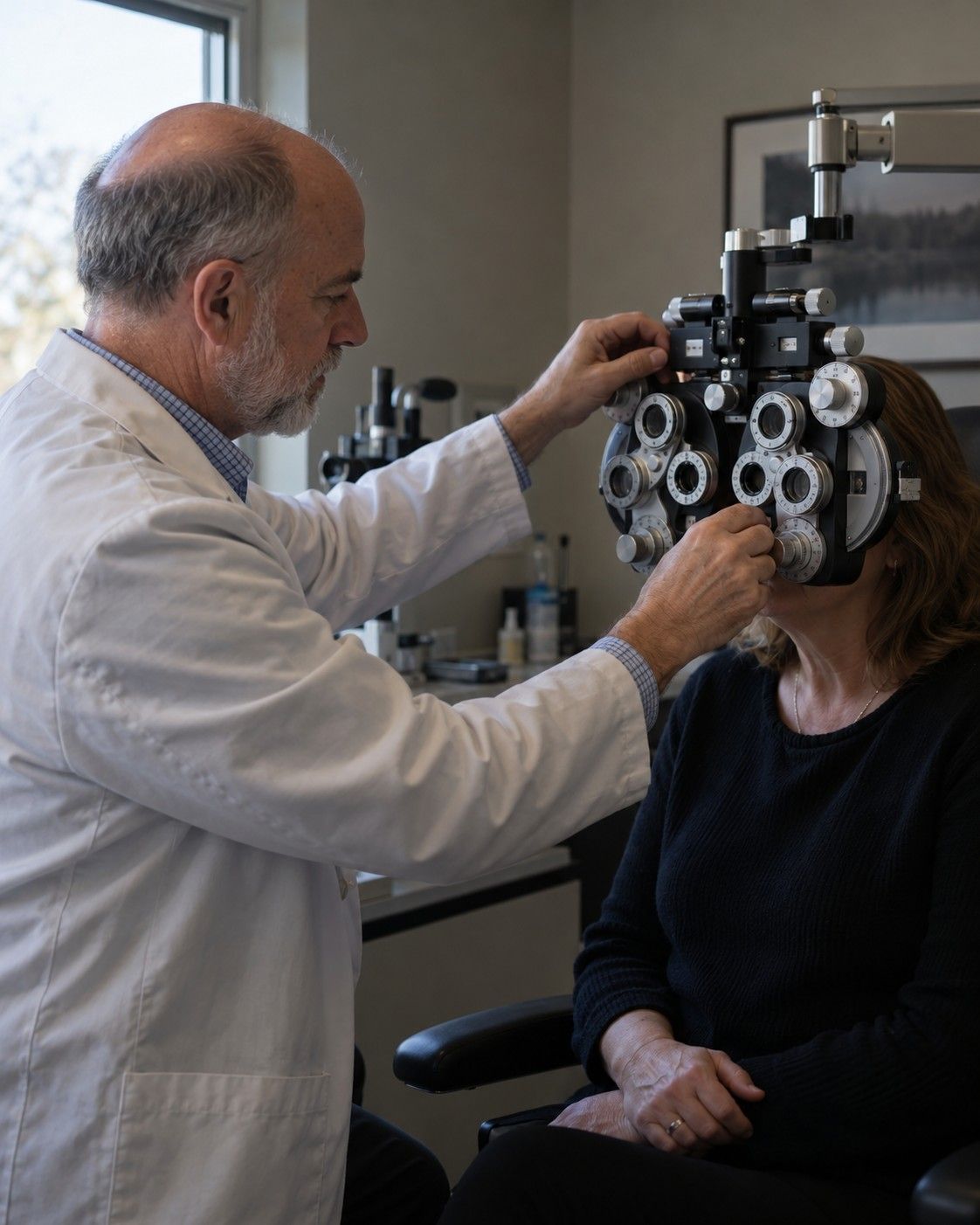
An optometrist examining a patient at a phoropter

What optometry practice buyers look for

  • 1+ ODAt least one full-time clinical optometrist
  • $400K+Stable annual gross revenue
  • 2+ exam lanesWith room to grow
  • 30 minutesWithin about half an hour of a major city

Optical revenue and strong patient retention are a plus. Outside these ranges? Every practice is worth a conversation.

The optometry market right now

Independent optometry is changing quickly. Private-equity-backed platforms, regional eye-care groups and optical retailers are all adding practices, alongside independent optometrists who want to own their own.

Demand for well-run independent practices is strong, which gives owners real choices about price, structure, autonomy and timing.

  • 16.5%of US optometrists practised in a private-equity-backed platform in 2022, up from 6.6% in 2018
  • About 50private-equity-backed eye-care platforms tracked in 2024
  • +26.5%forecast growth in US medical eye exams between 2020 and 2030, to more than 76 million a year
  • ~25%of the US population will be 65 or older by 2060, and over 90% of that group needs medical eye care

Sources: Richard Edlow, OD, Review of Optometric Business, July 2022; Review of Optometric Business private equity directory, June 2024; Review of Optometric Business, citing VisionWatch and the AOA, 2025

Who buys optometry practices

The right buyer depends on what you want from the sale. Here's how the main types tend to differ. Every buyer is different, so treat this as a starting point.

Regional groups and optical retailers

Deal structure
Mostly cash at closing. Often close faster, with more certainty.
Clinical autonomy and brand
More likely to standardize systems, and may rebrand and integrate the practice.
Your team
Usually keen to keep staff who know the patients.
Your role after
Often ask you to stay on for 2 to 5 years.

Private-equity-backed platforms

Deal structure
Cash at closing, often with rollover equity: a stake in the larger group that can pay out when it is sold again.
Clinical autonomy and brand
Often keep your brand and clinical control, at least in the near term.
Your team
Tend to invest in staff, technology and growth.
Your role after
Often want you to stay on and help the practice grow.

Independent optometrists

Deal structure
Usually financed with a practice loan; may include seller financing.
Clinical autonomy and brand
The practice stays independent.
Your team
Continuity depends on the buyer's plans.
Your role after
Often a shorter handover, or staying on part-time.

Private equity buyers for optometry practices →

What drives value

Buyers look at much more than revenue. These are the factors that move a valuation up or down, and why buyers care.

Earnings

Adjusted EBITDA is the starting point for most offers.

Patient retention

An active, loyal patient base tells a buyer the revenue will stay.

OD coverage

More full-time optometrists means less depends on you.

Optical sales

A strong optical business is a second revenue stream buyers look for. Track it separately from exams.

Payer and vision-plan mix

A healthy mix of private pay, medical and vision plans lowers buyer risk.

Equipment and lanes

Current technology and two or more exam lanes mean room to grow.

Owner dependence

The less production depends on you, the more a buyer will pay.

Location

Being close to a major city widens the pool of buyers.

What is adjusted EBITDA?

Earnings before interest, taxes, depreciation and amortization, adjusted to show what the practice would earn for a new owner: your own pay is reset to a market salary, and one-off or personal costs are added back. Buyers base most offers on it, which is why clean P&Ls matter. We don't value practices: the numbers come from buyers, or a specialist adviser, after an introduction.

How selling an optometry practice works

  1. A 15-minute call

    The size of your practice, property, goals and timing.

  2. What drives value

    Buyers usually price on adjusted EBITDA, with optical sales and payer mix weighed separately. We talk through what buyers look at in your practice. The numbers come from buyers, after an introduction.

  3. Buyer introductions

    One well-matched buyer at a time, never a public listing. Buyers usually ask for 2 to 3 years of P&Ls and a practice overview.

  4. Offer and letter of intent

    Usually non-binding. Review it with your attorney and accountant.

  5. Due diligence

    The buyer verifies financials, patient base, optical inventory, vision-plan participation, staffing, lease and equipment. Organized records keep this stage short.

  6. Closing

    Attorneys finalize the purchase agreement, your employment or transition agreement, and the lease. Insurance and vision-plan credentialing can take weeks, so it starts early. Funds transfer at closing. Most sales take 6 to 18 months, and you set the pace.

See which buyers fit your practice

It starts with a 15-minute call. There is no cost to the seller, no public listing, and you decide if and when you meet a buyer.

Common concerns

What happens to my team and patients?

Most buyers want to keep staff who know your patients, because that relationship is part of what they're buying. Terms usually stay the same or improve, and you can negotiate protections for key staff. We introduce buyers whose approach fits yours.

I'm a single-doctor practice. Is that a problem?

Not every buyer will fit, but some look specifically for single-OD practices. What matters is revenue, optical sales, location, how much depends on you and your plans after the sale. A short call tells you where you stand.

How to prepare your optometry practice for sale

  • Keep 2 to 3 years of clean P&Ls, with personal expenses separated and optical sales tracked separately from exams.
  • Count and update your frame and lens inventory.
  • Keep equipment and technology current.
  • Secure associate OD coverage, or document your systems so less depends on you.
  • Check how many years are left on your lease, or your options to renew.
  • Start 2 to 3 years ahead if you can.

What our buyers have in common

Proven acquirers

A record of successful acquisitions, and the capital to close.

Respect for your team

A commitment to keeping staff, clinical autonomy and patient care intact.

Long-term investment

Plans to invest in the practice's growth, technology and people.

“Right Fit Capital was a helpful sounding board throughout the process and helped us find what we believe was the best option for our practice.”
Portrait of Dr. N.
Dr. N.
Optometry practice owner, Wisconsin

Optometry practice sale questions

What is my optometry practice worth?

Most buyers price on adjusted EBITDA. Value moves with revenue, profitability, optical mix, payer mix, patient retention, equipment and location. We don't value practices: the numbers come from buyers, or a specialist adviser, after an introduction.

Who buys optometry practices?

Optical retailers, regional eye-care groups, private-equity-backed platforms and independent optometrists.

Private equity or corporate: which is better?

It depends on your goals. Private-equity platforms often keep your brand and clinical control in the near term and may offer rollover equity. Corporate groups are more likely to standardize and integrate, and tend to close faster with more certainty. We help you compare.

How long does it take to sell?

Most sales take 6 to 18 months from the first call to closing, but you set the pace: the timeline depends on how quickly you want to move.

Do I need a broker?

Not always. Some owners use a broker; others prefer direct, confidential introductions. If a broker would serve you better, we'll introduce you to one we trust.

What makes an optometry practice more valuable?

Strong adjusted EBITDA, a loyal patient base, a healthy optical business, a balanced payer mix, current equipment, two or more exam lanes and a stable team. Each one signals lower risk to a buyer.

How should I plan my departure?

It depends on your goals. Some owners sell and step away; others sell and keep practising for an agreed period, commonly 2 to 5 years; some sell part of the practice and keep a stake. Starting 2 to 3 years ahead gives you the most options.

How do I find buyers for my optometry practice?

The best buyers are often not found through public listings. We match your practice on revenue, optical sales, exam lanes, provider model, location and your plans, then introduce you to a buyer who fits.

Can I sell without my staff or patients knowing?

Your practice is never listed publicly, and details go only to buyers who are a genuine fit. Your staff and patients won't hear about it from us.

Get introduced to the right buyer

It starts with a 15-minute call. We learn what matters to you, tell you plainly whether there's a fit, and introduce you to a buyer if and when you're ready. 95% of qualified owners receive an introduction within 24 hours of our initial call.

  1. We learn about your practice
    Its size, property, your goals and timing.
  2. We tell you plainly
    Whether there's a fit, and what buyers look for.
  3. You decide what happens next
    Nothing to sign, no obligation.

Pick a time for your 15-minute call