
How to Sell a Veterinary Practice Confidentially: An Owner's Guide

If you want to sell a veterinary practice confidentially, design the process around privacy from the start. That means avoiding a premature public listing, limiting who receives information, screening buyers before you identify the hospital, and sharing sensitive details only in stages.
Confidentiality matters because a veterinary hospital is built on trust. Associate veterinarians, technicians, managers, clients, referral partners, landlords, vendors and competitors can all react if they hear sale rumors before there’s a real plan. Even if you’re only exploring, a loose process can cause disruption inside the practice.
The goal isn’t secrecy for its own sake. It’s control: over timing, context, which buyers see what, and how the transition is eventually explained to the people who matter.
Why confidentiality matters in a veterinary practice sale
Veterinary practices run on relationships. Clients trust the doctors and team, staff rely on stability, and associates may worry about their future. If news of a possible sale spreads early, people may assume change is coming even when you’re only weighing options.
Confidentiality protects:
- Associate veterinarians, who may worry about pay, schedules, medical autonomy or new management.
- Technicians and support staff, who may fear job losses or policy changes.
- Clients, who may worry that care, pricing, hours or doctors will change.
- Referral relationships with specialty, emergency and community partners.
- Your position with competitors, who may use rumors to recruit your staff or clients.
- Your leverage, because a practice that seems widely shopped can look less controlled.
Don’t wait for a rumor to think about confidentiality. Build it into the process before the first buyer conversation.
Can you sell a veterinary practice confidentially without a public listing?
Yes. Many owners start with a limited, anonymous profile and speak only with qualified buyers who have been screened for fit, ability to close, and discretion.
A public listing or a broad process suits some owners, but it isn’t required and it isn’t always the right first step. If you’re still deciding whether to sell, or if staff and client stability are major concerns, a targeted introduction process is often a better way to test interest. It shows you buyer appetite, likely questions and possible deal structures without broadcasting that your hospital may be for sale. See how matchmaking works.
What information should stay private at first?
Early conversations should use limited information. A buyer doesn’t need your practice name, exact address, full financials, staff list, client data, lease, tax returns or medical records before they’re qualified.
Information that usually stays private until later:
- Hospital name and exact location
- Detailed profit and loss statements
- Tax returns
- Client or patient information
- Employee names, pay, schedules or HR details
- Associate employment agreements
- Lease and real estate documents
- Vendor contracts
- Production by doctor
- Owner compensation and personal add-backs
At the start, a buyer may only need a high-level profile: general region, hospital type, approximate revenue range, number of doctors, services, facility overview and your goals.
How staged disclosure works
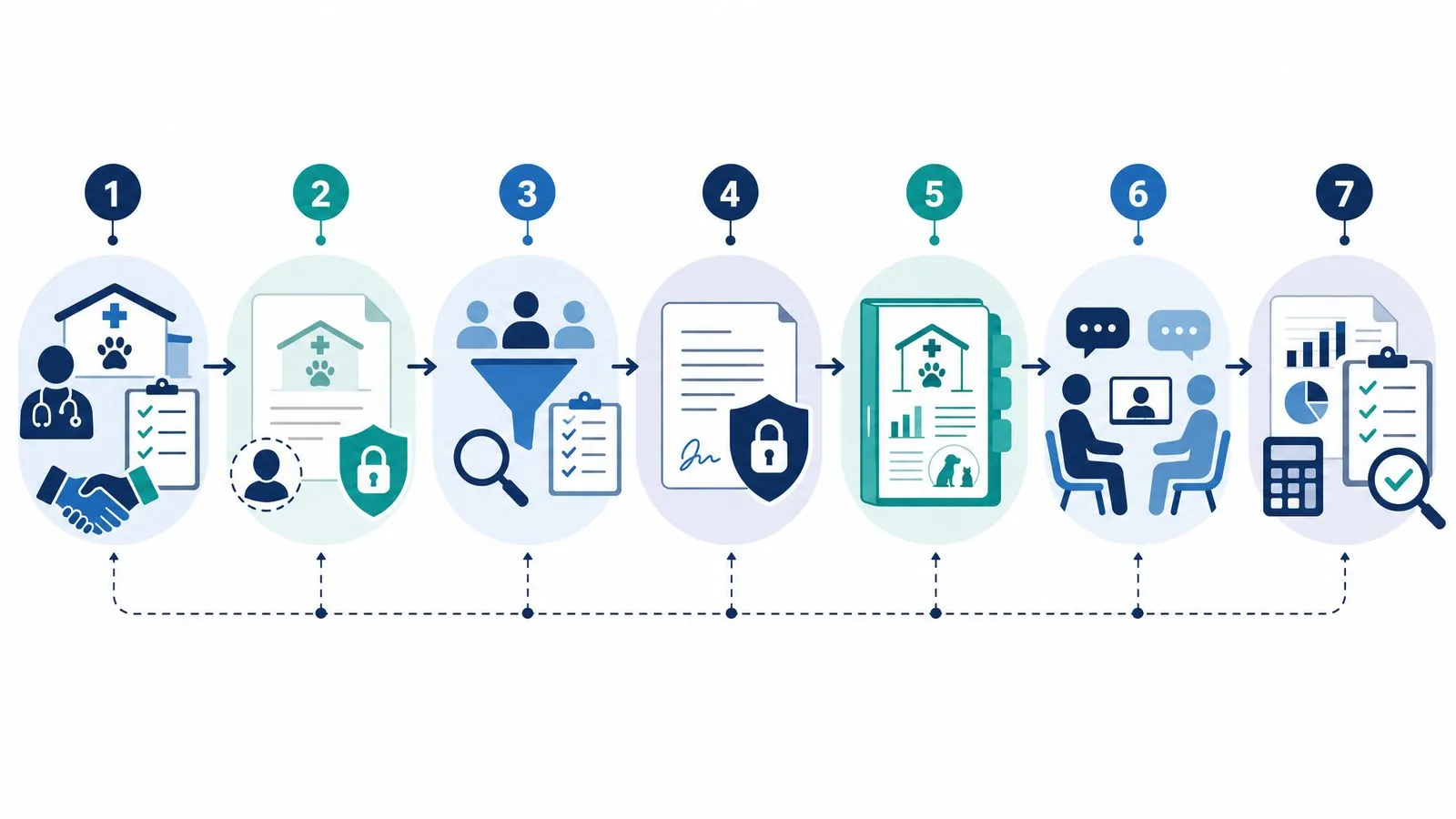
Staged disclosure means sharing information in layers. It’s the most important tool in a confidential veterinary practice sale. A typical sequence:
- Your goals: timing, the role you want after the sale, confidentiality concerns, staff priorities and buyer preferences.
- Anonymous overview: describe the opportunity without identifying the hospital.
- Buyer screening: confirm the buyer is serious, able to finance the deal, and relevant to your type of hospital.
- Confidentiality agreement: a standard step before identifying details are shared.
- Practice profile: more detailed financial, operational, doctor and transition information.
- Owner-buyer conversation: judge fit before moving toward an offer or letter of intent.
- Diligence: deeper documents only when there’s a clear path to a transaction.
This keeps you in control while still giving qualified buyers enough to move forward.
Screening matters more than paperwork
A signed confidentiality agreement is a routine step, not proof that a buyer is serious, qualified or aligned with your goals. Real protection comes from choosing who you talk to. Before sharing more, ask:
- Does this buyer understand veterinary practices?
- Are they active in your area and with your type of hospital?
- Can they finance and close the deal?
- Who on their side will see your information?
- Are they a direct competitor?
- What happens to your information if they don’t proceed?
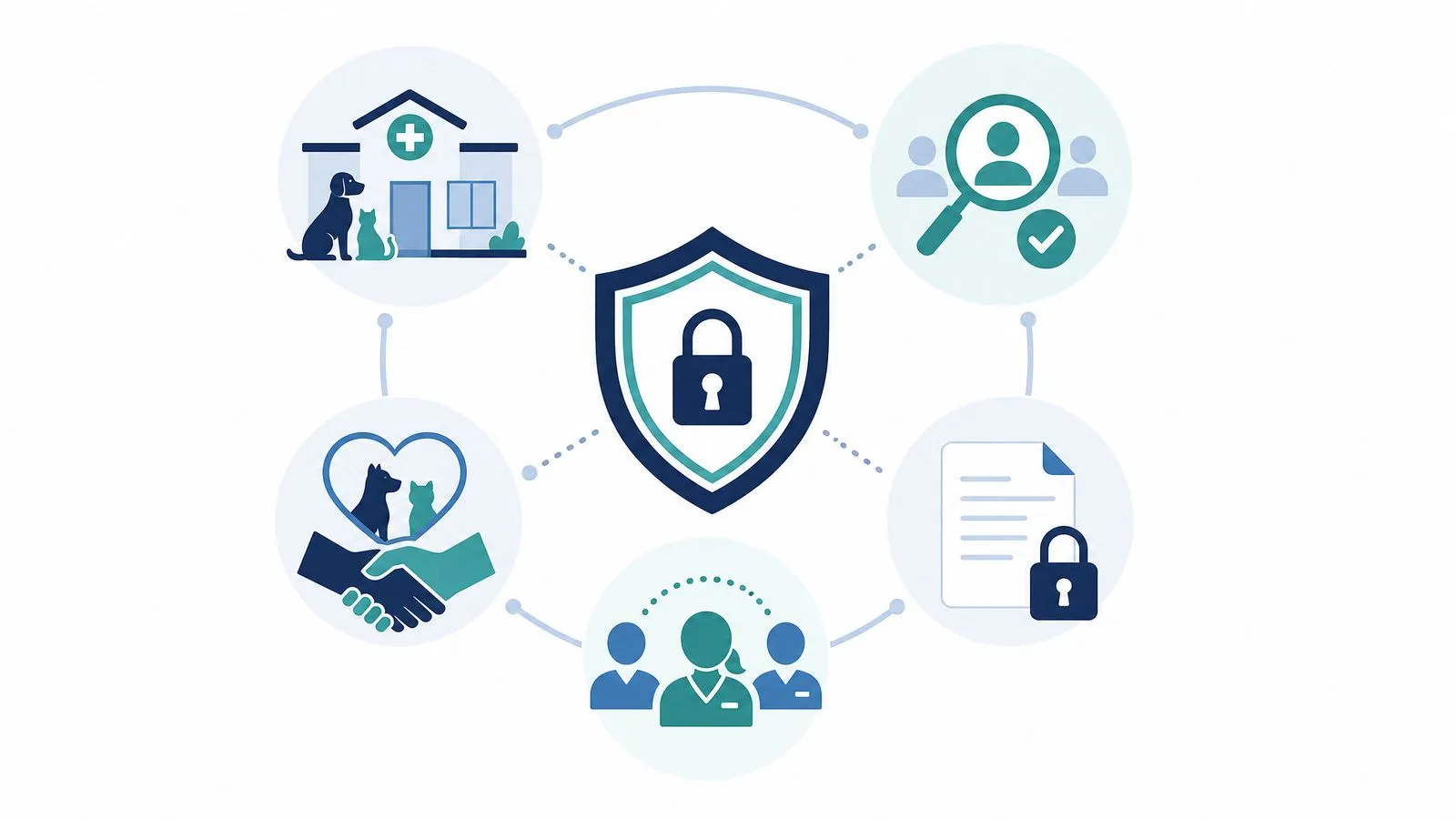
Strong confidentiality comes from screening, staged disclosure and controlled communication working together.
Protecting your staff and associate veterinarians
Staff and doctor stability are central to a practice’s value. If associates or key technicians become anxious, the practice can lose momentum before a transaction is even real.
Think carefully about when and how to tell your team. Telling everyone too early creates uncertainty; waiting too long without a plan creates other problems. The right timing depends on buyer fit, the letter of intent, diligence, the closing timeline, and what the buyer plans to change.
Before you talk to staff, try to understand:
- Whether the buyer plans to keep all employees
- What happens to pay, benefits and schedules
- Whether associate roles or contracts will change
- Whether hospital leadership will stay in place
- How medical autonomy and protocols will be handled
- Who will answer employee questions after the announcement
The best announcements aren’t vague. They give the team a clear reason to trust the transition. Our guide to what happens to employees when a veterinary practice is sold covers this in detail.
Protecting clients and your reputation
Clients usually don’t need to know about early buyer conversations. They need clarity when there’s a real transition and you can explain what will and won’t change.
Veterinary clients care about continuity: doctors, staff, medical standards, pricing, hours, access, and how their pets will be treated. Incomplete rumors make them assume the worst.
When the time comes, plan the message with the buyer: continuity of care, doctor availability, staff stability, and why the transition is happening. Confidentiality protects that moment, so you introduce the change with context instead of reacting to rumors.
Which buyers handle a confidential sale well?
Some buyers respect confidentiality better than others. Experienced veterinary buyers usually understand staged disclosure. Less experienced buyers, direct competitors or disorganized groups may push for too much, too early.
Veterinary buyers include individual veterinarians, associates, regional groups, corporate groups, private-equity-backed platforms, and specialty or emergency groups, and each has different diligence needs. Our guides on how to find buyers for a veterinary practice and whether you need a broker explain the options.
Red flags that confidentiality may be at risk
Watch how buyers behave before you share sensitive details. Be cautious if a buyer:
- Asks for the hospital name before being screened
- Wants detailed financials before explaining what they look for
- Can’t say who will receive the information
- Wants to contact staff, doctors, vendors, your landlord or referral partners early
- Is a local competitor without clear safeguards
- Pushes for client or patient information too soon
- Passes sensitive documents around in uncontrolled email chains
A serious buyer understands that confidentiality protects the practice they may want to buy.
How Right Fit Capital helps you sell a veterinary practice confidentially
Right Fit Capital helps veterinary owners explore sale options and buyer interest without putting the hospital on the open market. We clarify your goals, identify relevant buyers, and introduce you to qualified buyers privately. 95% of qualified owners receive an introduction within 24 hours of our initial call, and there is no cost to the seller.
Before you talk to buyers, the veterinary valuation calculator gives an educational estimate, and our checklist for preparing to sell lists the documents to gather. Learn more about selling a veterinary practice, read our common questions, or book a 15-minute intro call.