
How to Sell a Rural Veterinary Practice: Buyers, Value and Timing
or see an estimate: Veterinary valuation calculator →
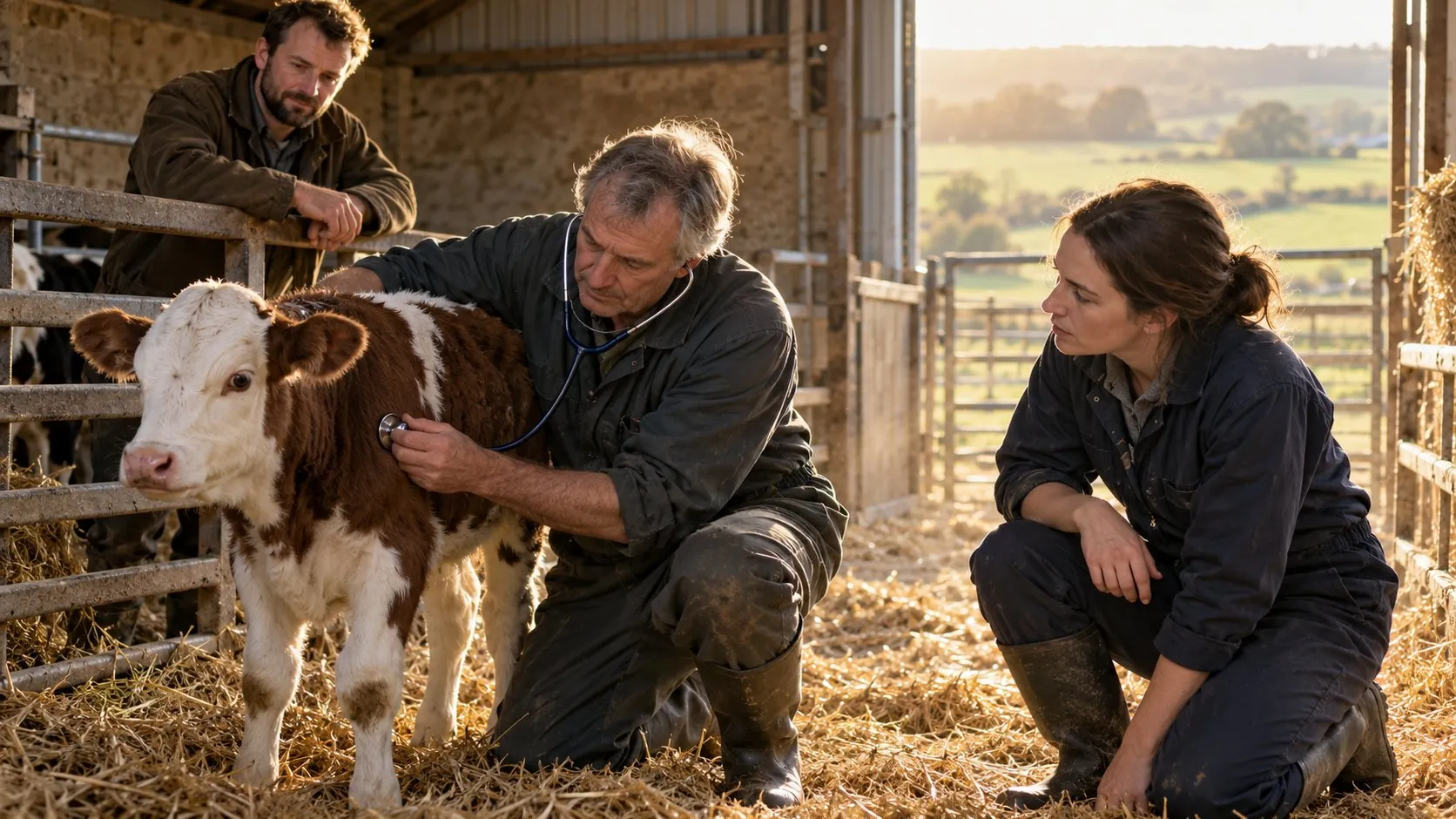
You can sell a rural veterinary practice, but the pool of buyers is smaller than in a city or suburb, and the sale usually takes more planning. The practices that sell well show a buyer that the next veterinarian can make a good living there, and a good life: steady demand, a team that stays, an on-call load one person can carry, and an owner willing to stay long enough to hand over the relationships.
Many rural owners have heard that the corporate groups only want big metro clinics. That’s partly true. Fewer groups buy far from a metro area, and industry reports put rural practices about 0.5 to 1.5 turns of earnings below comparable practices elsewhere (CT Acquisitions, June 2026). But groups aren’t the only buyers. This guide covers who buys rural practices, what they look at, how to prepare, and what to do if a buyer is slow to appear.
Can you sell a rural veterinary practice?
Yes. Rural practices change hands every year: to associates, to veterinarians who want small-town life, to neighboring practices, and to groups building a presence in a region.
What changes is the question a buyer asks. In a metro area, a buyer mainly asks what the practice earns. In a rural area, the buyer also asks who will do the work after you leave. Recruiting a veterinarian to a small town can take a long time, so a buyer is paying for a plan for continuity as much as for revenue and equipment.
A rural sale usually goes well when several of these are true:
- Revenue is steady or growing.
- Another veterinarian works in the practice, or there’s a realistic plan to recruit one.
- The on-call load is shared or manageable.
- The team is settled.
- The building, equipment and vehicles work, and the property is easy to separate from anything personal.
- You’re willing to stay for a transition, commonly 2 to 5 years.
Why rural practices are harder to sell
Fewer groups buy far from a metro area
Many groups grow by adding practices close to the ones they already own, where they can share doctors, referrals and management. A location within about 30 minutes of a metro area widens the pool of interested groups. Further out, fewer groups look, and those that do are more selective.
Recruiting is the buyer’s biggest worry
Sooner or later, the buyer has to replace your clinical work. Hiring veterinarians is hard everywhere and harder in remote areas: in 2025, 46 states had areas the US Department of Agriculture designated as veterinary shortage areas (NCSL, November 2025). If the practice depends on you alone, a buyer sees the risk of a hospital without a doctor.
On-call and large-animal work narrow the field
Many rural practices take emergency calls nights and weekends, and many treat livestock or horses as well as pets. Both are part of the practice’s value. They also limit who wants to buy it. A veterinarian who only does small-animal work, or who won’t take a call schedule of one night in two, may pass. Buyers look closely at how often you’re called out and who covers when you’re away.
Financing depends on what the practice can prove
Individual buyers usually borrow to buy. A lender lends against the cash flow the practice can document, so farm and personal expenses run through the practice, or informal bookkeeping, reduce what a buyer can borrow, and so what they can pay.
Who buys rural veterinary practices
| Buyer | Often a fit when | Watch for |
|---|---|---|
| Your associate | They know the clients and want to stay in the town | Financing; readiness to run the business |
| A veterinarian moving to the area | They want small-town life and ownership | Financing; time to find them; their family’s fit |
| A neighboring practice | Its clients and territory overlap with yours | Confidentiality; overlap of staff and services |
| A regional or rural-focused group | The practice sits in or near its region | Its plans for on-call and large-animal work |
| A national group or platform | A larger, multi-doctor hospital in a regional town | Selective criteria; a required stay |
Associates and veterinarians already in the area
The most natural buyer for many rural practices is someone who has already chosen the community: an associate, a relief veterinarian you work with, or a veterinarian at a nearby practice. Start the conversation early. An associate needs time to arrange financing and to grow into the owner’s role, and a staged buy-in over a few years can make the price affordable.
Veterinarians who want small-town life
Some veterinarians look specifically for a rural practice: they grew up in a farming area, want to work with large animals, or want to own a practice without metro property costs. They often need help with financing. Program rules change, so the buyer’s lender should confirm what applies:
- Student loans. The USDA’s Veterinary Medicine Loan Repayment Program can repay up to $40,000 a year of a veterinarian’s student loans in exchange for at least three years of work in a designated shortage area (USDA NIFA, 2026). If your area is designated, tell buyers and recruits.
- Business loans. USDA Rural Development guarantees part of lenders’ loans to businesses in rural areas (outside cities and towns of more than 50,000 people), and buying a business is an eligible use (USDA Rural Development, 2026). Lenders also use SBA-guaranteed loans for practice purchases.
- Seller financing. Carrying part of the price as a note, paid over several years, widens the pool of buyers, but you take on the risk that the buyer can’t pay. Take advice from an attorney and a tax adviser before agreeing to it.
Neighboring practices
A practice in the next town may want your clients, your team or your territory, and may already cover some of your emergencies. A sale or merger can be the simplest route, and the one where confidentiality matters most, because a competitor learns about your practice before anything is agreed. Screen carefully before you share details.
Groups
Regional groups and groups with a rural or mixed-animal focus look for practices that fit their footprint. National groups and private-equity-backed platforms are more selective outside metro areas; some will consider a multi-doctor hospital in a regional town. Groups differ widely in how they handle on-call, large-animal services and your role after the sale; see selling your veterinary practice to a corporate group.
Buyers typically look for $750K+ in stable annual revenue, but that’s a typical fit, not a cutoff. Outside these ranges? Every practice is worth a conversation.
What buyers look at in a rural practice
- Doctor coverage. How much of the revenue you produce, and whether another veterinarian could take over your caseload.
- Revenue trend and the local market. Several years of steady revenue matter more than one strong year. Buyers also look at whether the population and livestock numbers around you are growing, stable or shrinking.
- Service mix. The split between small-animal, large-animal and equine work, and what each earns. Recurring work such as herd health, wellness plans and pharmacy is a strength.
- On-call load. How many nights and weekends, how emergencies are shared with neighboring practices, and how far it is to the nearest emergency hospital.
- The team. Long-serving technicians and front-desk staff who know the clients are one of a rural practice’s best assets.
- Facility, equipment and vehicles. The clinic, any large-animal handling facilities and ambulatory trucks, and any maintenance that’s been put off.
- The property. Whether the building is owned or leased, and whether it shares land with your home or farm; see veterinary practice real estate: sell it, lease it or hold.
How a rural location affects value
Most buyers price on earnings. Smaller practices are usually priced on seller’s discretionary earnings (SDE), which add the owner’s pay back in; larger ones on adjusted EBITDA. For 2024 to early 2026, CT Acquisitions puts single-doctor practices under $500K of SDE at 2.5x to 4.5x SDE, and practices with $500K to $1M of SDE at 4.0x to 6.5x. It puts rural practices 0.5 to 1.5 turns below comparable practices (CT Acquisitions, June 2026). These are directional ranges, not an appraisal.
The rural adjustment is an average, not a rule. Where a practice sits in its range depends on the things buyers look at above: a rural practice with two doctors, a settled team and a stable area is a different proposition from a one-doctor practice in a shrinking one. Our veterinary multiples guide explains the adjustments, and the veterinary valuation calculator gives an educational estimate. Right Fit Capital doesn’t value practices: real numbers come from buyers, or a specialist adviser, after an introduction.
Price isn’t proceeds, either. Structure and taxes decide what you keep; see what you take home after selling a veterinary practice.
How to prepare a rural practice for sale
Start three to five years before you want to stop practicing. Recruiting takes longer in a rural area, and most of what raises a buyer’s confidence takes time.
- Add a second veterinarian, even part-time. An associate or a regular relief veterinarian reduces how much depends on you, and may turn out to be your buyer. If your area is a designated shortage area, the loan repayment program can help you recruit.
- Make the on-call load something one person can carry. Share a rotation with neighboring practices, agree referral arrangements with the nearest emergency hospital, and write down how it works.
- Separate the books. Three years of clean P&Ls and tax returns, with farm, family and personal expenses taken out and add-backs documented. If you do both large- and small-animal work, report each separately.
- Separate the property. If the clinic shares land with your home or farm, work out early how it could be sold or leased on its own: survey, access, utilities. If you lease, check the term and your right to assign the lease.
- Introduce clients to the rest of the team. Rural clients, farm clients especially, are often loyal to you personally. Take your associate or technicians on farm calls and into appointments so the relationships don’t leave with you.
- List equipment and vehicles. Age, condition and what’s owed on each, including ambulatory trucks and large-animal equipment.
- Decide how long you can stay. A buyer is far more comfortable if you’ll stay a year or more than if you need to leave within months. Many buyers ask for 2 to 5 years.
Our checklist for preparing to sell lists the documents buyers ask for at each stage.
Help a buyer picture life in your town
A veterinarian moving from elsewhere is choosing a community as well as a practice. Be ready to talk about schools, housing, work for a spouse or partner, the nearest hospital and airport, and what people do on their days off. A realistic on-call schedule matters here too: it decides whether the practice feels like a job or a way of life. You know your town’s strengths better than anyone; make them part of the conversation.
Keep a rural sale confidential
In a small town, news travels fast. If staff hear a rumor, a technician may start looking for another job; if clients hear one, they may wonder whether you’re leaving. Share your practice’s name only with buyers who are a genuine fit, release financial details in stages, and take the most care with local competitors. Our guide to selling a veterinary practice confidentially explains how staged disclosure works.
If a buyer is slow to appear
If no buyer comes forward quickly, you still have options before closing:
- A longer transition. Stay on longer, perhaps part-time, to give a buyer time to recruit.
- A staged sale to an associate, with ownership and your hours stepping down together.
- Seller financing, so an individual buyer can afford the price.
- A merger with a neighboring practice, combining clients and staff.
- Selling the property separately, or leasing it to the buyer.
Closing should be the last option, because it gives up the value of the client base you built and still leaves obligations for records, staff and the property. Our guide to a veterinary practice exit strategy compares the routes, and how to sell a single-doctor veterinary practice covers owner dependence in depth.
How Right Fit Capital helps
We introduce veterinary practice owners to buyers whose plans fit their practice and their goals, one introduction at a time. Our clients are national and regional groups, private-equity-backed platforms and brokers who represent individual veterinarians. For a rural practice, we start with what you want from the sale, your timing and how long you could stay, then tell you candidly which buyers are likely to fit. 95% of qualified owners receive an introduction within 24 hours of our initial call. There is no cost to the seller, and you decide if and when you meet a buyer.
Learn more about selling a veterinary practice, or get introduced to a buyer on a 15-minute call.